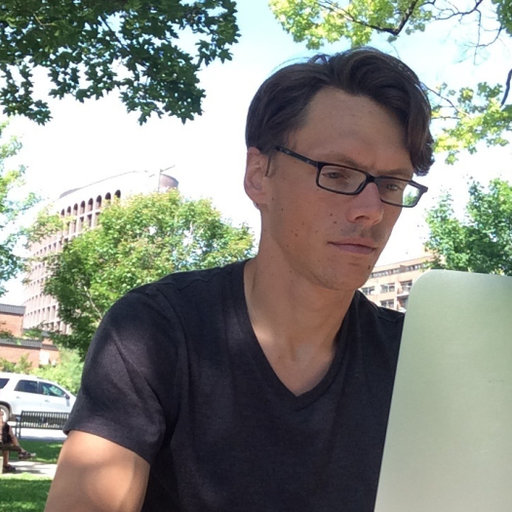
About me
I am an Associate Professor of Computer Science at the University of Ottawa (EECS) and a Faculty Affiliate with the Vector Institute. My research focuses on deep learning and reinforcement learning for real-world systems, with an emphasis on sim-to-real, safety, and efficiency adaptation, and continual learning.
I lead the Machine Intelligence and Robot Learning (MIRL) group and am a member of the Robots at uOttawa (Rob@Uo).
Research Areas
- Reinforcement Learning: safe RL, model-based RL, continual RL, sample efficiency, sim-to-real
- Deep Learning: imbalanced/limited data, active learning, interpreability
- Applications: robotics, healthcare, industrial automation, AI for science
Latest News
- May 2026 — Two papers accepted at RLC 2026
- April 2026 — Awarded NSERC Discovery Grant. See the research summary here and proposal here.
- April 2026 — MSc thesis defense: Alireza Seyed Azimi
- April 2026 — Student Honours Project research presented at Canadian AI 2026
Prospective Students
I am always looking for motivated computer science students who are interested in reinforcement learning, deep learning, and robotics. If you are interested, please apply to the appropriate graduate program and complete the linked form here. I will review all applicants deemed admissible by the admissions office. Note: due to email volumes, I am not able to respond to each applicant.
Selected Publications
View full publication list (Google Scholar)
- General and Efficient Visual Goal-Conditioned Reinforcement Learning using Object-Agnostic Masks, RLC, 2026
- Deep Policy Gradient Methods Without Batch Updates, Target Networks, or Replay Buffers, NeurIPS, 2024
- ChemGymRL: A customizable interactive framework for reinforcement learning for digital chemistry, Digital Discovery, 2024
- Understanding CNN fragility when learning with imbalanced data, Machine Learning, 2024
- Learning When to Observe: A Frugal Reinforcement Learning Framework for a High-Cost World, ECML-PKDD, 2023
- The class imbalance problem in deep learning, Machine Learning, 2022